I modded Claude Code. That might be what software looks like next.
This might be what software looks like next. Not a bigger app. A starting point you mod until the interface matches the way you work.
Most software still ships one interface and asks every user to live inside it. The workflow is treated as a shared average. Yours is not. You hand work off differently. You keep a pile of chats open. You care about a cache timer the next person never looks at. Settings get you a little further. Then you wait for the roadmap, and the feature that ships is still built for everyone, not for the way you actually move through the day.
Claude Code mods are a very basic version of the other idea: a custom, bespoke interface for an individual workflow, described in plain English, sitting on top of a tool you already use.
I am not saying the future arrives as a plugin menu. I am saying I can already see the shape of it. If something is missing, I do not file a feature request and hope. I tell Claude what the control should do, and it builds a mod that changes the UI and the behaviour. Same app. My controls.
That is a small version of bespoke software. Not a one-off product for a company. A one-off surface for one workflow.
I run a lot of Claude Code sessions. Some days it is one long chat. Most days it is a pile of them, all half-finished, all touching the same repo.
The work was fine. The friction was not.
I kept repeating the same instructions. I kept losing track of which goal was still running, and which chat I was supposed to check.
So I asked Claude to read my session logs and tell me what I actually do, not what I think I do. I wanted the repeated tasks, the instructions I type again and again, and the little annoyances that show up once several chats are open.
Then I asked for a few mods that would make that workflow easier. I did not build every suggestion. I kept the ones I would actually click.
Mods are the interesting part. They ship inside plugins, and they can change the UI and the behaviour of Claude Code. You install them with /plugin. The mod itself is code, but I did not start by writing code. I described the result in plain English and had Claude build it.
You install them with /plugin.
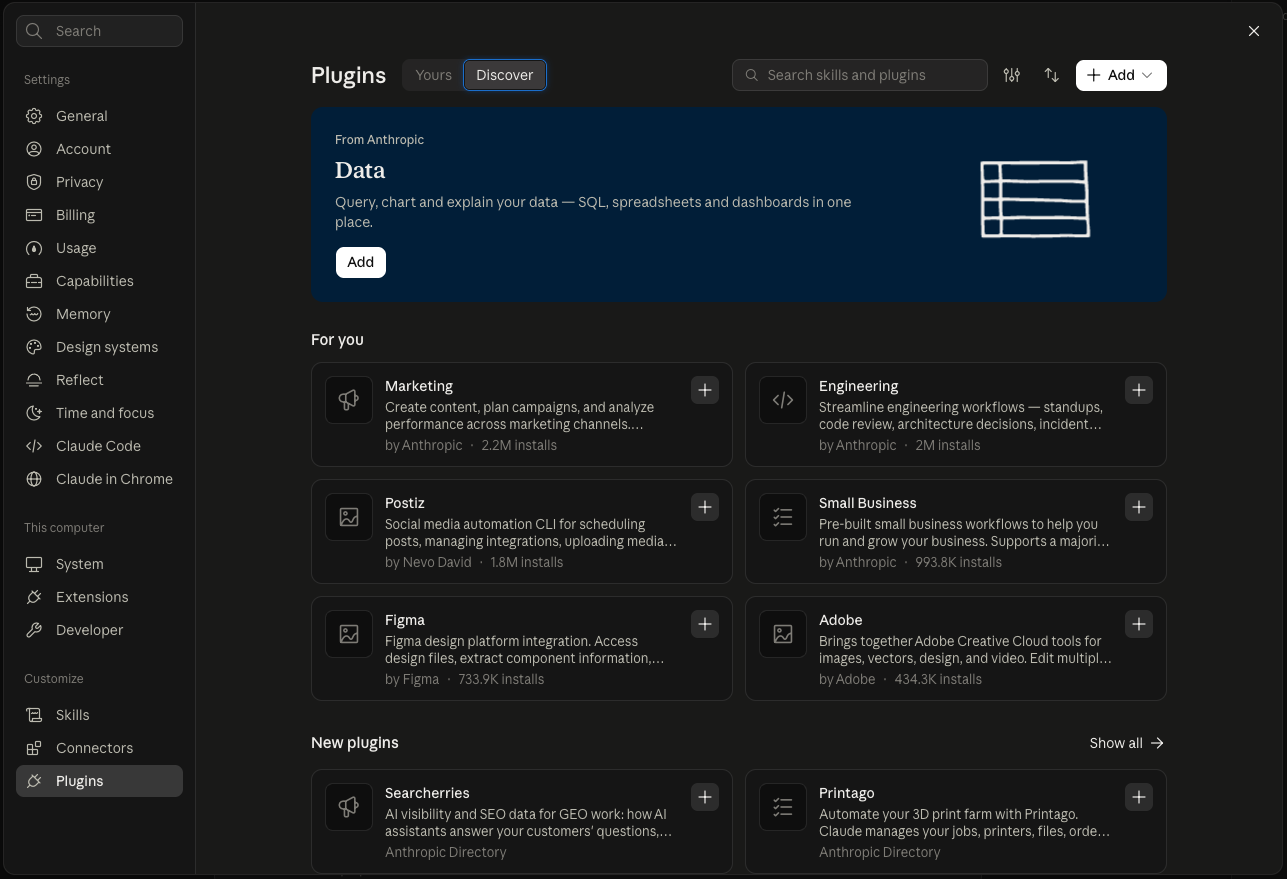
Here is what stuck.
Cache Keeper
I wanted the boring numbers in front of me, not buried in a menu.
Cache Keeper sits above the prompt. It shows context size, five-hour and weekly usage, a rough API-equivalent cost so I know what the session would have cost on the API, and a cache timer so I can see when the conversation is about to get expensive to reprocess.
When that timer gets close, I get a nudge to send another prompt, compact the chat, or hand the session off.
The hand-off was the real win. I already had a skill for it. Before, I ran the skill, copied the result, cleared the chat, pasted it into a fresh one, and kept going. Now there is a button for the hand-off, and another that clears and carries the hand-off with it.
Two clicks for something I was already doing by hand. That is the bar. If a mod does not sit on a habit I already have, I do not want it.

Goal Meter
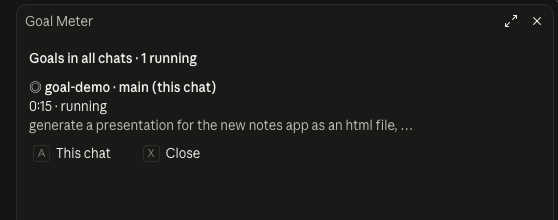
I use /goal a lot. When several are running, I lose the plot: which task is current, how long it has been going, and which chat I should even check.
Goal Meter puts the task list, elapsed time, and progress in a panel. A single control opens the fuller view, including goals in other chats. I have had around a dozen sessions open. I wanted one place to look.
Elapsed time is visibility, not a promise. It does not tell me how long the rest will take. It stops me from guessing.
Start with your own logs
I would not start by copying someone else’s mods. Start with the thing you already do every day and ask Claude to make that part of the app easier.
The prompt I used was simple:
Look through my session logs and identify the tasks I do often, the instructions I repeat, and the friction in my workflow. Suggest five useful Claude Code mods based on those patterns, and explain what each would do.
Review the suggestions before you build anything. A busy new panel is only useful if it helps you do something you already care about.
If there is something you wish Claude Code did, you can probably ask it to build the control. That is the shift for me. Less waiting for the product to grow the feature, and more putting the workflow I already have where I actually use it.
More From The Lab
Related architecture and engineering writeups from this site.
Solving Tool-Dependency Failures with Phase-Based Missions
How I redesigned Goose mission execution so multi-step workflows stay reliable when later tool arguments depend on earlier results.
Architecting a Resilient Discord AI Bot: A Solutions Architect Case Study
How I translated product and operational constraints into a reliable Discord + Ollama architecture using queueing, bounded context memory, and defensive runtime controls.
Building a Resilient SPFL Widget Stack
Design notes from building The Wee Table: source-priority ingestion, stale-cache fallback, widget rendering constraints, and reliability-first product behaviour.